


尼尔斯 斯坦塞斯(Nils Christian Stenseth)传授是挪威闻名科学家,曾经任挪威科学院院长,其研究兴致涵盖生态学及进化科学的广泛范畴。三十多年来,他一直与多个中国机构紧密亲密互助,前后得到中华人平易近共及国国际科学技能互助奖、中国当局情谊奖。 作为中国科学院外籍院士,他于近日中国科学院学部举办的“可连续成长与开放互助:科学配合体的责任”国际钻研会上接管《中国科学报》采访时暗示:“投资好奇心驱动的基础研究将使中国及世界受益。” ? 《中国科学报》:你与中国偕行开展了哪些互助?取患了哪些冲破? 斯坦塞斯:我与中国多家科研机构都开展了互助,包括中国科学院动物研究所、北京师范年夜学、清华年夜学,近来与清华年夜学万科大众卫生与康健学院开展互助较多,这段互助卓有成效。于孝敬专业常识的同时,我也从中国同事身上获益良多。与我互助的团队实力很是雄厚,拥有一批能力出众的年青学者,我很是珍视与他们的协作。 咱们的研究聚焦在解析天气变化怎样影响各类生态体系,包括疫病流传。咱们还有尤其研究了天气变化对于激发黑死病的病原体——鼠疫流传的影响。咱们的持久跨学科研究很是乐成,提出了诸多立异性的看法,已经于国际顶级期刊发表。多种啮齿动物是鼠疫的宿主,此中旱獭是要害宿主之一。事实上,我将与中国疾控中央的科学家举行西藏旱獭的遗传学研究,但愿展现鼠疫流传的份子机制。 《中国科学报》:你认为中挪可于哪些范畴深化科学互助? 斯坦塞斯:除了当前聚焦的鼠疫等人兽共患病研究外,互助应拓展至其他感染病范畴。此外,深切探究天气变化对于生态体系的威逼具备主要潜力。中国富厚的汗青数据为重构已往生态动态、猜测将来危害提供了名贵基准。 全世界青年科学家都应踊跃介入国际研究交流。列国具备怪异的科学传统,融入多元学术情况可拓宽研究要领论视线。资深学者需踊跃撑持青年学者赴海交际流。本年秋季,我将于奥斯陆欢迎数位中国粹生,鞭策此类互助。 《中国科学报》:你对于中国科技成长有何印象?对于中国应优先撑持哪些科学范畴有何建议? 斯坦塞斯:中国正于经由过程充实的投入撑持基础科学成长。与很多国度同样,中国将立异驱动成长作为优先事项,更主要的是,中国一样撑持好奇心驱动的基础研究——这是立异的根底。这类两重存眷对于促成科技事业的持久成长至关主要。我的建议是,继承确保对于好奇心驱动的基础研究的投入——这将惠和中国以致世界。 CAS Foreign Member Nils Chr. Stenseth: Investing into Curiosity-driven Basic Solid Research Will Benefit China and The world Prof. Nils Chr-Stenseth is a world-renowned Norwegian scientist whose research interests span a broad spectrumof ecological and evolutionarysciences. For over threedecades, Stenseth has been closely collaborating with many Chinese institutions. He has received the International Science and Technology Cooperation Award of China and the Chinese Government Friendship Award. As a Foreign member of the Chinese Academy of Sciences(CAS), Stenseth told China Science Daily at the 70thAnniversary of the founding of the Academic Divisions of CAS: “Investing money into curiosity-driven basic solid research will benefit China and the world. ” CSD: What is your cooperation with Chinese counterparts, and what breakthroughs have you made? Stenseth:I have collaborated with multiple institutions in China, beginning with Institute f Zoloology at CAS in Beijing, Beijing Normal University and most recentlywith Tsinghua University. My primary current partnership is with the Vanke School of Public Health, Tsinghua University. This collaboration has been extraordinarily fruitful. While I have contributed expertise, I have learned muchfrom my Chinese colleagues. The Vanke group I’m collaborating with is a very, very strong group, which has very clever young people. And I appreciate it very muchand have benefitted much from them. Our researc三木SEO-h has focused on understanding how climate variation impacts diverse ecological systems, including disease transmission networks. We have specifically studied how climate change influences plague—the pathogen responsible for the Black Death. Our findings indicate that due to current climate trends, in the northern part of China, there will likely to be more plague cases, whereas in the southern part there is likely to be less, which is consistent with what we observe. Because up north is where wesee the plaguein humen. Here, the human plague infection is not many, but a few every year.Whereas in the southern part there is none.So,our cross-disciplinary studies on plague through ages has been very, very successful. We have produced a lot of new insights being published in very good journals. Several rodent species act as disease reservoirs, but marmotes(Marmota spp.) are amont the criticalhost species. In fact, I plan to discuss ongoing genetic studies on marmotsin Tibet with colleagues from China’s CDCtomorrow, aiming to unravel molecular mechanisms underlying plague transmission. CSD: In which fields do you believe Sino-Norwegian scientific cooperation can deepen in the future? Stenseth:Beyond our current focus on zoonotic diseases—with plague as a primary case study—we should expand to other infectious diseases. Additionally, there is great potential in advancing our understanding of how climate variation and long-term climate change threaten ecological systems. China’s extensive historical data provide invaluable baselines for reconstructing past ecological dynamics and predicting future risks. CSD: As a veteran of cross-disciplinary international collaboration, what advice would you give to young researchers? Stenseth:I believe it is essential for young scientists—including those in China—to engage in international research exchanges. Each country has unique scientific traditions, and i妹妹ersing oneself in diverse academic environments broadens perspectives on research methodologies. Senior researchers must actively support young scholars in pursuing overseas experiences. This fall, I will host several Chinese student in Oslo to foster such collaborations. CSD: What is your impression of China’s science and technology development? Looking ahead 5–10 years, which emerging fields should China prioritize to drive technological breakthroughs? Stenseth:I think you are supporting basic science with good investment. Like many nations, it is prioritizing innovation-driven growth, but importantly, it also supports curiosity-driven basic research– which is essential for innovation. This dual focus is critical for sustaining long-term scientific progress. I think my advice would be make sure that the country is investing money into curiosity-driven basic solid research, that will benefit China and the world.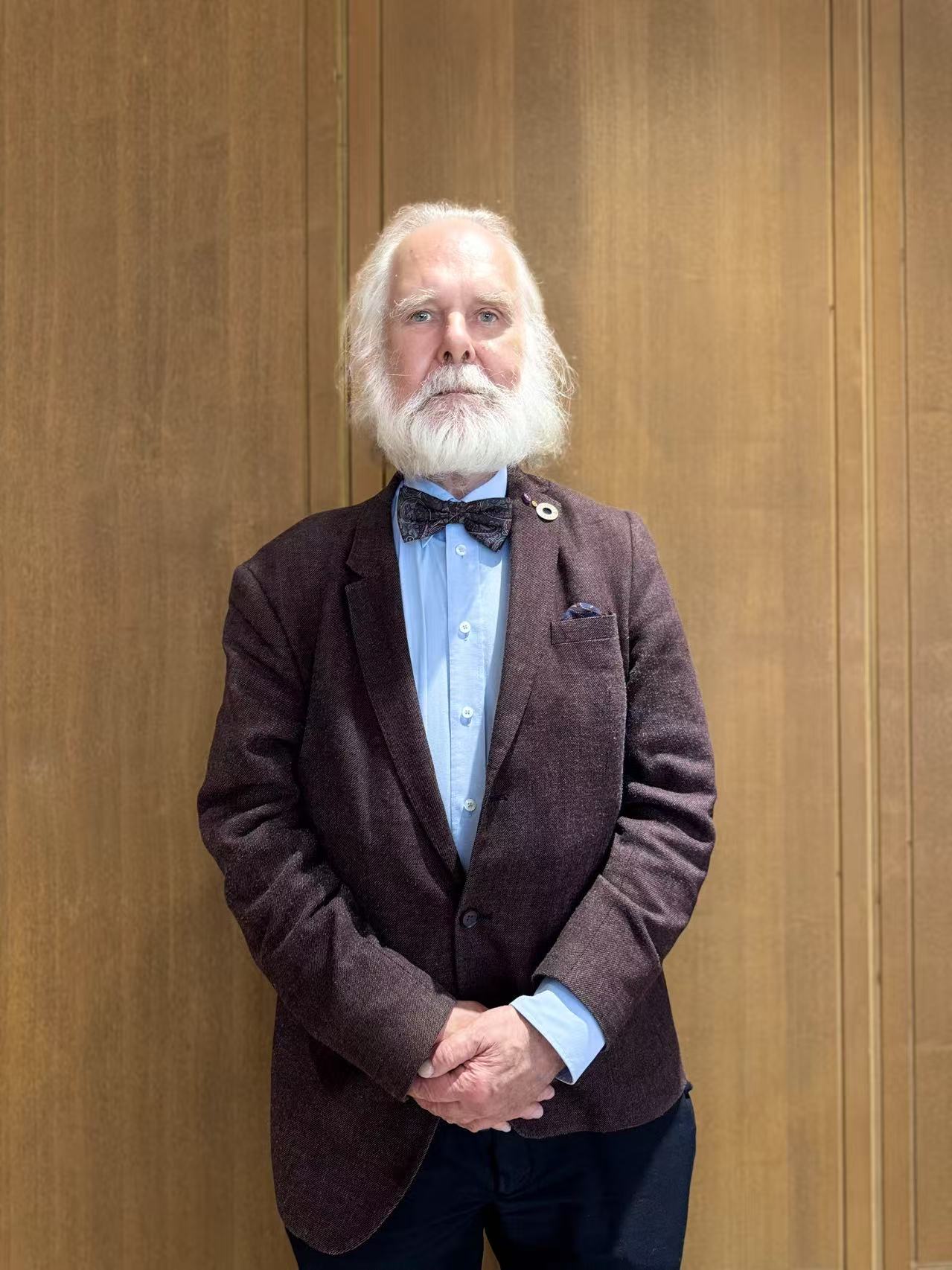 Nils Christian Stenseth。冯丽妃摄